Choosing the right water for your home and health can often feel like navigating a complex maze. With an abundance of options available, two terms frequently cause confusion: distilled water and filtered water. While both aim to deliver cleaner hydration, their purification methods, resulting compositions, and ideal uses are fundamentally distinct. Understanding these differences is not just about purity; it’s about making an informed decision that aligns with your health goals, household needs, and even the longevity of your appliances. This comprehensive guide will demystify the nuances between distilled and filtered water, empowering you to select the best option for every purpose.
Understanding Distilled Water
Distilled water represents the pinnacle of water purity, often referred to as “pure H₂O.” Its production method, known as distillation, is a time-honored process that mimics nature’s own water cycle. It begins by heating water to its boiling point, transforming it into steam. As the steam rises, it leaves behind virtually all dissolved solids, contaminants, minerals, chemicals, and even microorganisms, which cannot vaporize with the water. This purified steam is then cooled and condensed back into liquid form in a separate, clean container.
The result is water stripped of almost everything except its fundamental H₂O molecules. This ultra-pure state makes distilled water invaluable in various specialized applications where any trace impurities could interfere with processes or machinery. However, this extreme purity also means the water lacks the naturally occurring minerals like calcium, magnesium, and potassium that are typically found in tap and most filtered waters. This absence contributes to its characteristic “flat” or bland taste.
Common uses for distilled water include:
- Medical and laboratory applications: Where absolute purity is critical to prevent interference with experiments or medications.
- Household appliances: Such as steam irons, humidifiers, and CPAP machines, to prevent mineral buildup (limescale) and extend their lifespan.
- Automotive uses: For car batteries and cooling systems, to avoid mineral corrosion.
- Specific short-term health regimens: Sometimes used for detox or by individuals with compromised immune systems under medical guidance.
Understanding Filtered Water
Filtered water, in contrast to distilled water, encompasses a broader category of water treated to remove specific impurities while often retaining beneficial natural minerals. Filtration involves passing water through a physical or chemical barrier, or a series of barriers, designed to trap or neutralize undesirable substances. The effectiveness and what is removed depend entirely on the type and quality of the filtration system used.
Various filtration technologies cater to different needs:
- Activated Carbon Filters: These are common in pitcher filters and refrigerator dispensers. They excel at reducing chlorine, sediment, volatile organic compounds (VOCs), and improving taste and odor. They generally leave beneficial minerals intact.
- Sediment Filters: Primarily remove larger particles like sand, dirt, and rust, protecting other filtration stages.
- Reverse Osmosis (RO) Systems: Considered a more advanced form of filtration, RO systems force water through a semi-permeable membrane. This process effectively removes a wide range of contaminants, including lead, fluoride, nitrates, pesticides, and many dissolved solids. While highly effective, RO can also reduce some beneficial minerals, which is why some RO systems include a re-mineralization stage.
- Ultraviolet (UV) Filters: Used to kill bacteria, viruses, and other microorganisms by exposing them to UV light, without altering the water’s chemical composition or removing minerals.
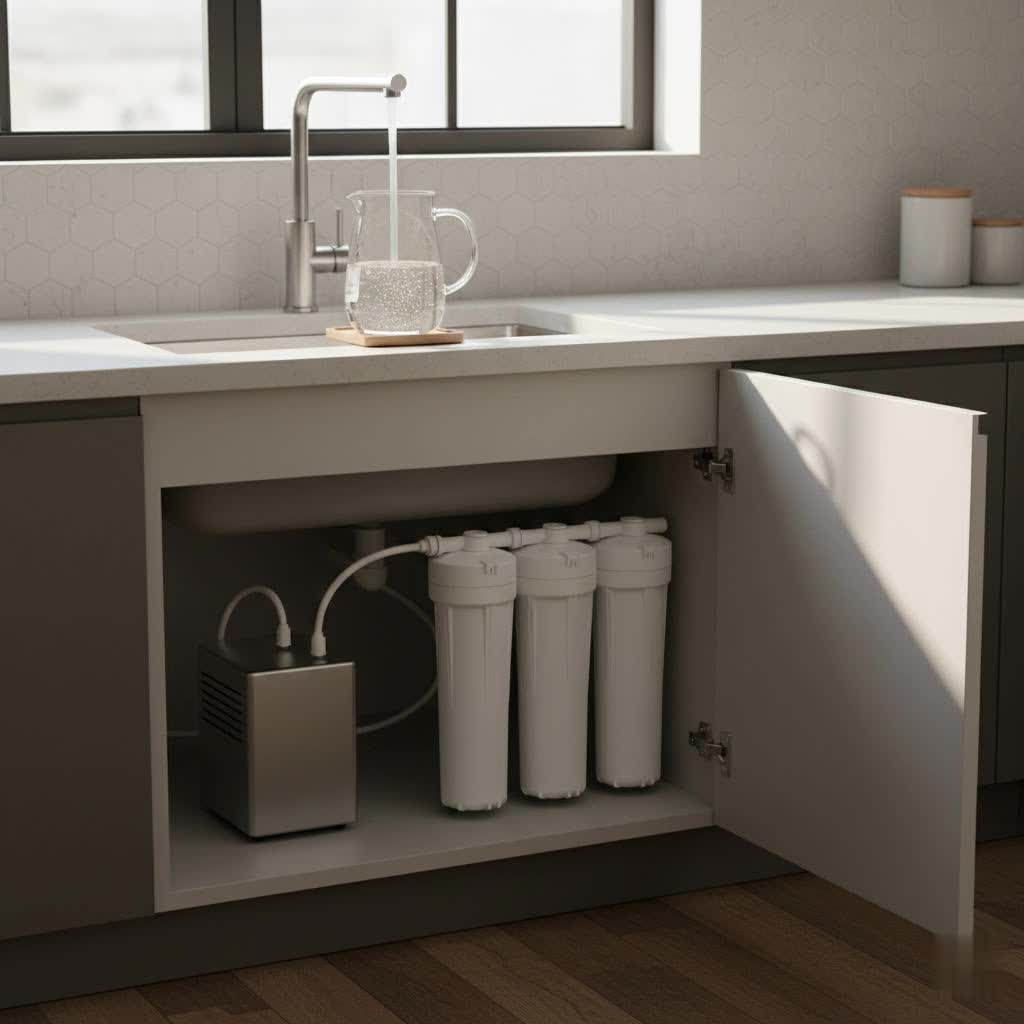
- Multi-stage Filtration Systems: Combine several of these technologies to provide comprehensive purification, often found in whole-house or under-sink units.
Filtered water is widely favored for daily consumption because it removes common contaminants without stripping away the minerals our bodies need. It offers a balance between purity, taste, and health benefits, making it an excellent choice for drinking, cooking, and general household use.
Distilled Water vs. Filtered Water: A Detailed Comparison
To highlight the core differences, let’s examine how these two types of water compare across key attributes:
| Feature | Distilled Water | Filtered Water (General) |
|---|---|---|
| Purification Process | Boiling, evaporation, and condensation (distillation) | Physical barriers (carbon, sediment, membranes), chemical adsorption, UV light |
| Mineral Content | Removes virtually all minerals (demineralized) | Retains beneficial minerals (though some advanced filters like RO may remove some) |
| Contaminant Removal | Removes nearly all contaminants (inorganic, organic, biological) | Removes specific contaminants depending on filter type (chlorine, sediment, heavy metals, VOCs, bacteria) |
| Taste | Flat, bland, sometimes described as “empty” or “pure” | Retains natural taste, often improved by removal of chlorine and other taste-altering impurities |
| Health Implications for Drinking | Potential for mineral deficiencies, electrolyte imbalance with long-term, exclusive consumption | Generally considered healthy, provides hydration while retaining essential minerals |
| Common Applications | CPAP machines, steam irons, laboratories, car batteries, specific medical uses | Daily drinking, cooking, coffee makers, general household use, plant watering |
| Energy Consumption | Higher energy use due to boiling and cooling | Varies by system; typically lower than distillation for home use |
| Cost | Can be more expensive to purchase or produce at home | Varies significantly by system type and maintenance (filter replacements) |
Health Considerations: Which is Better for Drinking?
When it comes to daily hydration, the consensus among many health experts leans towards filtered water. While distilled water is incredibly pure, its lack of essential minerals is a significant drawback for regular consumption.
“Distilled water, while free of contaminants, also lacks the beneficial minerals our bodies need for proper function. For everyday drinking, water that retains a healthy mineral balance is generally preferred.”
Drawbacks of Drinking Distilled Water
Consuming distilled water as your primary source of hydration over an extended period can lead to several concerns:
- Mineral Deficiency: Your body needs minerals like calcium and magnesium for bone health, nerve function, and muscle contraction. Distilled water provides none of these, potentially contributing to deficiencies if your diet isn’t rich enough in them.
- Electrolyte Imbalance: Minerals play a crucial role as electrolytes, which are vital for maintaining proper fluid balance, nerve signals, and muscle contractions. Constantly drinking demineralized water can potentially disrupt this delicate balance.
- Flat Taste: The absence of minerals results in a taste many find unappealing, which might discourage adequate water intake.
- Potential for Leaching: Some theories suggest that demineralized water may actively try to leach minerals from your body to balance its own composition, though more research is needed in this area.
|
Our Picks for the Best Water purifier in 2026
As an Amazon Associate I earn from qualifying purchases.
|
||
| Num | Product | Action |
|---|---|---|
| 1 | Brita 27 Cup Water Filter Dispenser with Elite Filter, NSF Certified to Remove 99% of Lead, Reduces 30 Contaminants Including Microplastics, Mercury & Chlorine, SmartLight Indicator, BPA-Free, Black |

|
| 2 | Brita Metro Water Filter Pitcher with SmartLight Change Indicator, BPA-Free, Replaces 1,800 Plastic Water Bottles a Year, Lasts Two Months, Includes 1 Filter, Small - 6-Cup Capacity, White |
|
| 3 | Brita Large Water Filter Pitcher for Tap and Drinking Water, Includes 1 Standard Filter, BPA-Free, Lasts Two Months, 10-Cup Capacity, Bright White |
|
| 4 | Waterdrop G3P600 Reverse Osmosis System, 8 Stage Tankless Reverse Osmosis Water Filter, NSF/ANSI 42 & 53 & 58 & 372 Certified, Under Sink RO System, 2:1 Pure to Drain, Smart LED Faucet |
|
| 5 | Bluevua RO100ROPOT Countertop Reverse Osmosis Water Filter System, Portable RO Filtration with Remineralization, No Installation, WQA Certified - ROPOT-UV, 6-Stage RO |
|
| 6 | DREO Reverse Osmosis Water Filter Countertop, RO Filtration System, 3:1 Pure to Drain, TDS & Filter Life & Autofill Pitcher, Installation-Free, Self-Cleaning Water Purifier, RO Water Filter |
|
| 7 | PUR 30-Cup Countertop Water Filter Dispenser, 1 Genuine PUR Filter, 2-in-1 Powerful Filtration, Lasts 2 Months or 40 Gallons, Dishwasher Safe, White/Blue (DS1800Z) |
|
| 8 | Brita UltraMax Large Water Dispenser with Standard Filter, BPA-Free, Reduces Copper, Cadmium and Mercury Impurities, Lasts 2 Months or 40 Gallons, 27-Cup |
|
| 9 | PUR Plus Vertical Faucet-Mount Water Filtration System, Lead-Reducing Filter, Easy Installation, 100-Gallon Capacity, Compatible with External Aerators, Grey |
|
| 10 | LifeStraw Personal Water Filter for Hiking, Camping, Travel, and Emergency Preparedness |
|
While occasional consumption of distilled water is generally safe for healthy individuals, it is not recommended as a long-term, sole source of drinking water, especially for children, athletes, or those with specific health conditions who lose minerals through sweat or require higher intake.
Benefits of Drinking Filtered Water
Filtered water, on the other hand, offers a more balanced approach for daily consumption:
- Removes Harmful Contaminants: Filters are designed to target and reduce common impurities found in tap water, such as chlorine, lead, pesticides, and bacteria, improving the safety of your drinking water.
- Retains Essential Minerals: Most filtered water, particularly from carbon or basic sediment filters, preserves the beneficial minerals that contribute to taste and health. Even some advanced RO systems incorporate re-mineralization stages.
- Improved Taste and Odor: By removing chlorine and other undesirable elements, filtered water often tastes cleaner and more refreshing, encouraging better hydration.
- Better for the Environment: Using a home water filter system significantly reduces reliance on single-use plastic bottles, contributing to a more sustainable lifestyle.
- Cost-Effective: While there’s an initial investment and ongoing filter replacement cost, filtering your own water is typically more economical than consistently buying bottled water.
When to Choose Each Type of Water
The choice between distilled and filtered water ultimately depends on the specific application.
Choose Distilled Water for:
- Sensitive Appliances: For items like steam irons, CPAP machines, humidifiers, and car batteries, distilled water prevents mineral buildup, which can cause damage and reduce efficiency.
- Laboratory Work: Where precision and the absence of any trace elements are paramount.
- Medical Equipment: As specified by healthcare providers for certain medical devices or solutions.
- Short-Term Detox: Some individuals use it for brief detoxification periods under medical supervision, recognizing its complete lack of minerals.
Choose Filtered Water for:
- Everyday Drinking: It provides clean, safe, and great-tasting water without sacrificing vital minerals.
- Cooking: Enhances the flavor of food and beverages by removing chlorine and other impurities.
- Bathing and Showering: Whole-house filters can reduce chlorine exposure, which can be harsh on skin and hair.
- Houseplants: Most plants thrive with the minerals found in filtered water rather than the completely demineralized profile of distilled water.
- Pets: Providing filtered water ensures your pets are also consuming water free from common contaminants while still getting beneficial minerals.
Making an Informed Choice for Your Home
Selecting the right water purification method for your home involves considering your local water quality, your specific concerns, and your household’s daily needs. Start by understanding what’s in your tap water; local water reports are usually available online. If you’re concerned about specific contaminants like lead, PFAS, or nitrates, a certified filtration system (like an NSF/ANSI certified RO system) might be necessary. If taste, odor, and chlorine are your main issues, a simpler carbon filter might suffice. For appliances sensitive to mineral buildup, keeping a supply of distilled water separate from your drinking water is a practical solution.
Conclusion
The distinction between distilled water and filtered water is clear: one offers ultimate purity by removing everything, while the other provides clean water by targeting harmful contaminants while preserving beneficial natural elements. While distilled water serves critical roles in specialized applications, filtered water emerges as the superior choice for everyday drinking and cooking, offering a balanced profile that supports long-term health and hydration. By understanding their unique characteristics and applications, you can confidently make choices that ensure optimal water quality for every aspect of your life.
What steps will you take to evaluate your water needs and make an informed choice for your household?
Frequently Asked Questions
Is it safe to drink distilled water every day?
While occasional consumption is generally safe, drinking distilled water every day as your primary source of hydration is not recommended. It lacks essential minerals like calcium and magnesium, which can lead to mineral deficiencies and electrolyte imbalances over time if not adequately replenished through diet.
Does filtered water remove beneficial minerals?
Most common filtered water, particularly those using activated carbon filters, are designed to remove harmful contaminants while retaining beneficial minerals like calcium and magnesium. However, advanced systems like reverse osmosis (RO) can remove a significant portion of these minerals, though many modern RO systems include a re-mineralization stage to add them back.
Which water tastes better, distilled or filtered?
Most people find filtered water tastes better than distilled water. Filtered water retains its natural mineral content, which contributes to a more pleasant and refreshing taste. Distilled water, being completely demineralized, often has a “flat” or “empty” taste that many find unappealing.
Can I use filtered water in my CPAP machine or steam iron?
While filtered water is better than unfiltered tap water, it is generally not recommended for appliances like CPAP machines or steam irons. Even filtered water can contain some minerals that, over time, will lead to scale buildup. Distilled water, being completely free of minerals, is the preferred choice for these devices to prevent damage and ensure longevity.
How do I know what kind of filter I need for my home?
To determine the best filter, start by checking your local water quality report, often available from your municipal water provider. This report will highlight common contaminants in your area. You can also get your water tested. Based on these findings and your specific concerns (e.g., taste, lead, bacteria), you can choose a filter certified to address those issues.